Sustainability
Human Capital Strategy
Approach to Value Creation through Human Capital Strategy
The foundation and culture we have built through continued technology and product development have enabled us to accelerate growth, strengthen long-term competitiveness, and create new value in emerging markets.
To achieve our FY2030 “Target Position,” the Group will secure and develop the people needed to enhance the effectiveness and feasibility of its future strategies.
The Group will create workplaces where diverse people can contribute and thrive, build organizations that encourage transformation, and continue to create corporate value sustainably even as its management strategies evolve.
Developing People Who Drive Transformation
- Enhancing personnel systems, training programs, and workplace environments that enable people to fully demonstrate their capabilities
- Fostering a corporate culture that values new ideas grounded in respect for diversity and a spirit of challenge that embraces transformation
Promotion System and Roles for Human Capital Strategy
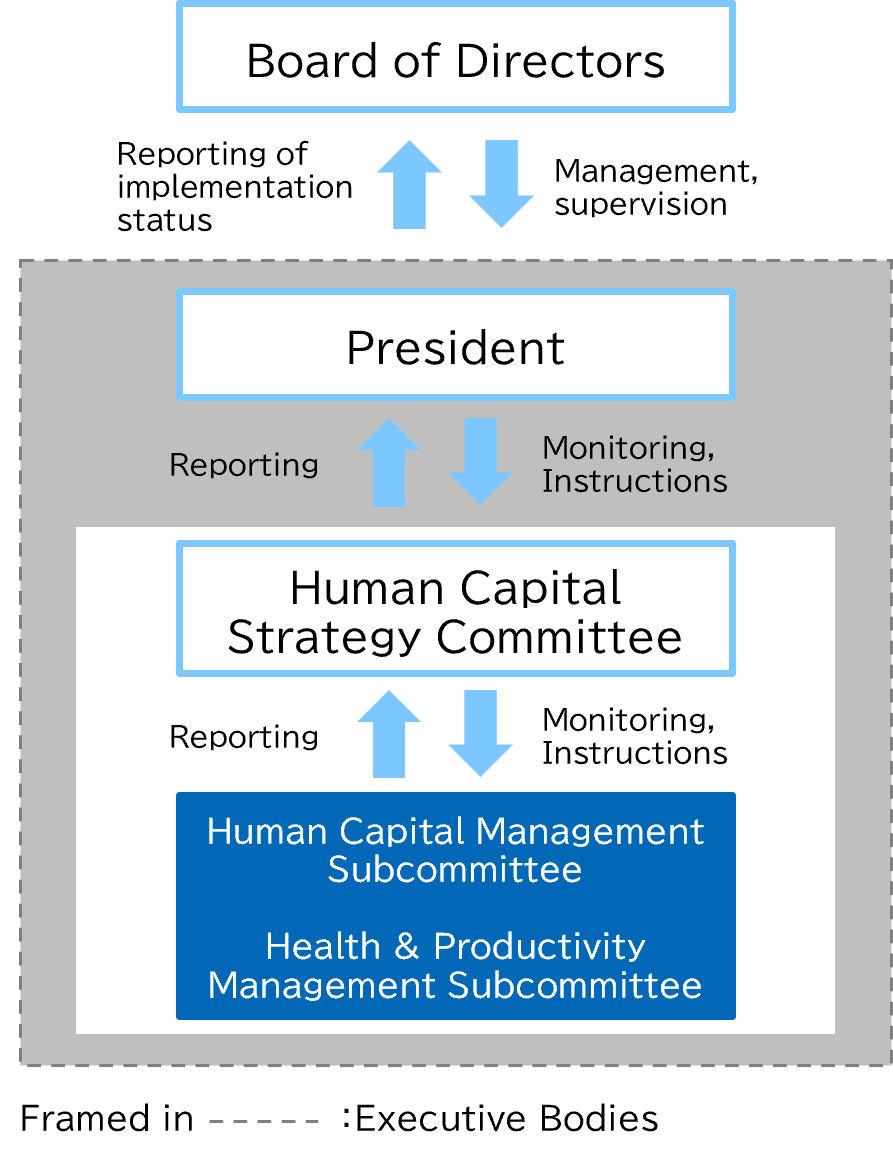
As the core body for strengthening the Human Capital Strategy set out in the ’24 Mid-Term Business Plan, the Group abolished the former Work Style Reform Promotion Committee and established the Human Capital Strategy Committee in January 2026. The Committee aims to strengthen the link between management strategy and Human Capital Strategy and enhance corporate value over the medium to long term. In addition to employee development, engagement, and placement, the Committee considers cross-functional measures to enhance fulfillment at work, health, and motivation for growth, and implements them systematically and continuously in coordination with relevant departments.
In addition, under the Human Capital Strategy Committee, the following subordinate organizations have been established to promote measures according to each purpose.
- Human Capital Management Subcommittee
With the theme of employee engagement, development, and placement linked to management strategy, this subcommittee works on the promotion of talent management, reskilling, and development of human resources who will support the next generation. - Health & Productivity Management Subcommittee
By maintaining and improving employee health, fulfillment at work, and quality of life (QOL), this subcommittee promotes workplace environments that support the sustainable growth and engagement of employees.
Promotion system and roles for human capital management
| Promotion organization | Main roles |
|---|---|
| Human Capital Management Subcommittee | Securing global talent Strengthening technology development capabilities Globally optimized production capabilities Digital transformation Advancement of women (DEI) |
| Health & Productivity Management Subcommittee | Maintaining and promoting employee health Improving productivity and performance Creating supportive workplaces Improving work-life balance Smoking reduction measures |
In addition, from the perspective of promoting human capital management, “strengthening of Human Capital Strategy” has been identified as one of the materiality items, and promotion organizations are designated for each measure (see the table below). The organizations promoting each measure report implementation status to the Human Capital Strategy Committee, and the implementation details of the measures are monitored and evaluated.
Material Issue: “Strengthening the Human Capital Strategy” - Organizations Responsible for Each Priority
| Issues to be addressed | Measures for the issue | Promotion organization |
|---|---|---|
| Promotion of DEI | Improvement of the percentage of women in management positions | Human Resources Department |
| Promotion of human capital management | Improvement of employee engagement | Human Capital Strategy Committee |
The Mitsuboshi Belting Group recognizes people as its most important source of growth for achieving sustainable growth and enhancing social value. The Group sets out the Human Capital Strategy shown below in its FY2030 “Target Position.” In the ’24 Mid-Term Business Plan disclosed in May 2024, the Group also identified strengthening the Human Capital Strategy as its highest-priority issue for improving profitability and is accelerating related initiatives. By combining the abilities of diverse people, including not only Group employees but also external human resources, the Group will create a major driving force for improving profitability.
Risks and Opportunities in Human Capital Strategy
The Group also continuously manages the risks associated with promoting its Human Capital Strategy. Specifically, it considers the possibility that risks may arise, including a decline in employee engagement, a decline in organizational capabilities due to insufficient active participation by diverse people, widening skill gaps in the use of digital technology, and shortages of human resources.
For these risks, the Human Capital Strategy Committee and each promotion organization regularly monitor progress, and, based on the results of engagement surveys and analyses of various KPIs, review and strengthen measures as necessary.
日本の三ツ星ベルトグループにおける人的資本に係るリスクと機会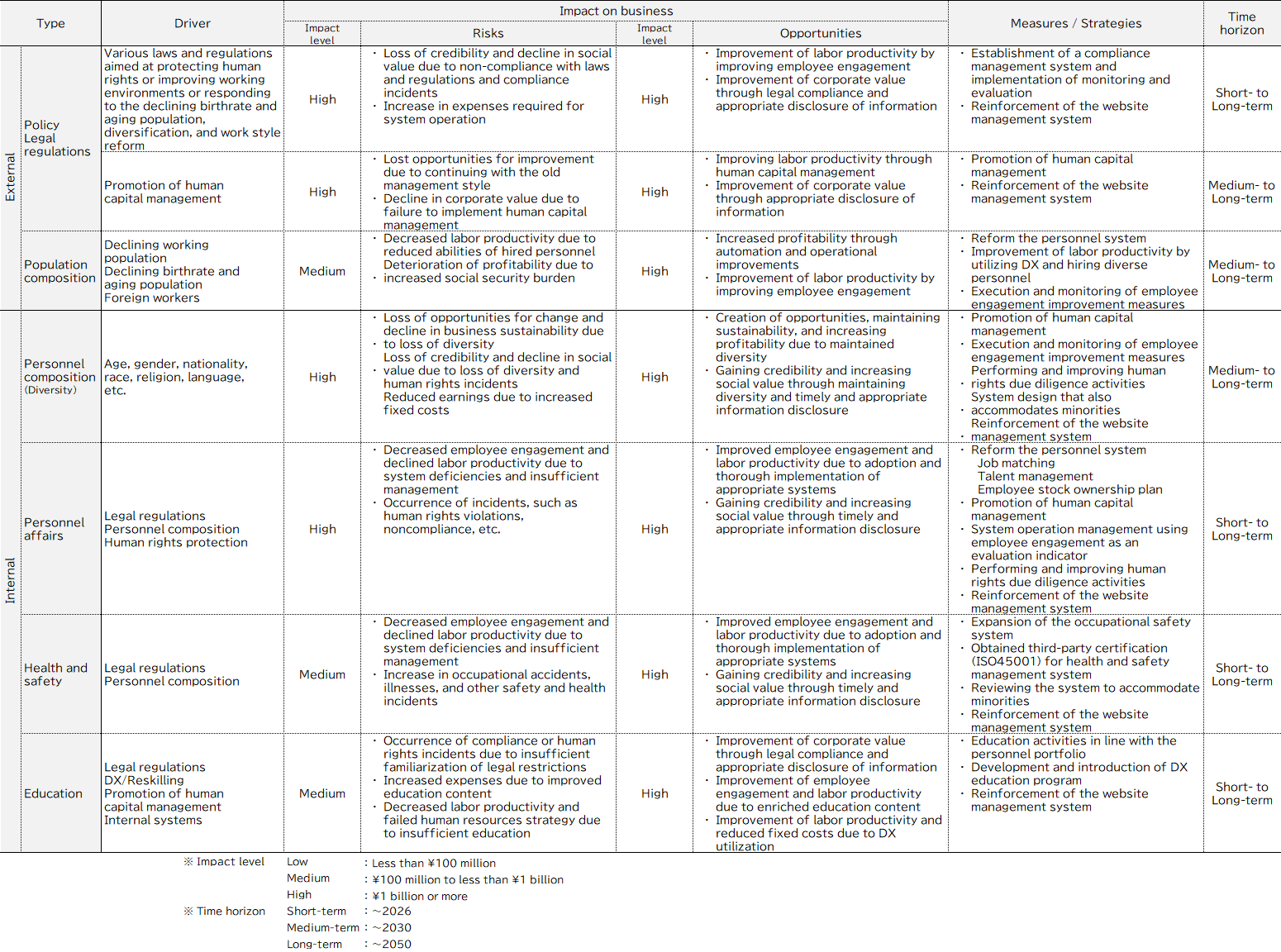
The Group’s Human Capital Strategy is grounded in its corporate philosophy, “To give attentive consideration to both humanity and nature,” and in the principle of “walking together and growing together.” Linked with management strategy, it treats people not merely as resources but as capital, promotes transformation through co-creation, and aims to build an organization that grows sustainably.
Development of Human Resources Responsible for Global Co-creation
The Group regards strengthening the talent base that supports sustainable growth in its global business as an important management issue. As part of this initiative, the Group promotes the strategic securing and development of human resources expected to play active roles overseas. Specifically, in addition to employees with experience in overseas assignments and current overseas assignees, the Group regards as target employees those with strong language skills, those with overseas study experience, and those who aspire to overseas assignments. The Group systematically implements development programs aimed at strengthening language skills, understanding different cultures, and acquiring global business skills, and works to develop human resources who can respond immediately to overseas assignments. Through these initiatives, the Group aims to broaden and enhance its pool of global talent and build a sustainable talent pipeline that supports the growth of its overseas businesses.
Promotion of “Challenge and Empathy”
To foster a culture that encourages challenge, the Company has revised personnel systems to reflect employees’ aspirations, introduced a job-matching system through an open internal application process, and established an employee stock award system. However, the engagement survey results indicate that further improvement is needed, and the Company recognizes insufficient psychological safety as one contributing factor.
In addition, the Company recognizes as one issue that there is a gap in perception between the “challenge” set forth by management and how each employee receives it. As a response to these issues, the Company will work to create opportunities for two-way dialogue through round-table discussions and other means.
Job-Matching System (Internal Recruitment System)
The Company believes that a system supporting voluntary challenges is necessary to enable employees’ diverse strengths to be fully demonstrated and utilized across the organization. It is therefore introducing a job-matching system through an open internal application process, giving employees opportunities to take on roles they aspire to. The system is also expected to improve employee engagement by helping employees realize their career plans.
Introduction of an Employee Stock Award System (MISA*)
This system aims to foster a sense of participation in management by granting shares to eligible employees, and to further enhance motivation and morale to contribute to improved business performance. Through this, the Company aims to improve employee engagement and connect it to the sustainable enhancement of corporate value.
* MISA: Mitsuboshi Individual Shares Award
Enhancement of Capability Development Programs
In the Group, new employee education and initial operator education conducted in every workplace are the first step in employee capability development. Thereafter, the Group implements various capability development programs, including level-based training programs associated with changes in roles, specialized training according to job content, training required by laws and regulations, and training that supports self-development (see the table below). In addition, QC circle activities, “GLOBAL GEMBA KAIZEN ACTIVITY,” which is a place for presenting and supporting improvement activities at all sites including overseas sites, and the results-reporting meetings for these activities also greatly contribute to employee capability development. The awards given to excellent activities at the reporting meetings are one of the driving forces behind the activities. These capability development programs are planned and implemented each fiscal year by departments or designated organizations based on skill matrices, and after their effectiveness is evaluated, they are developed into the following fiscal year’s activities.
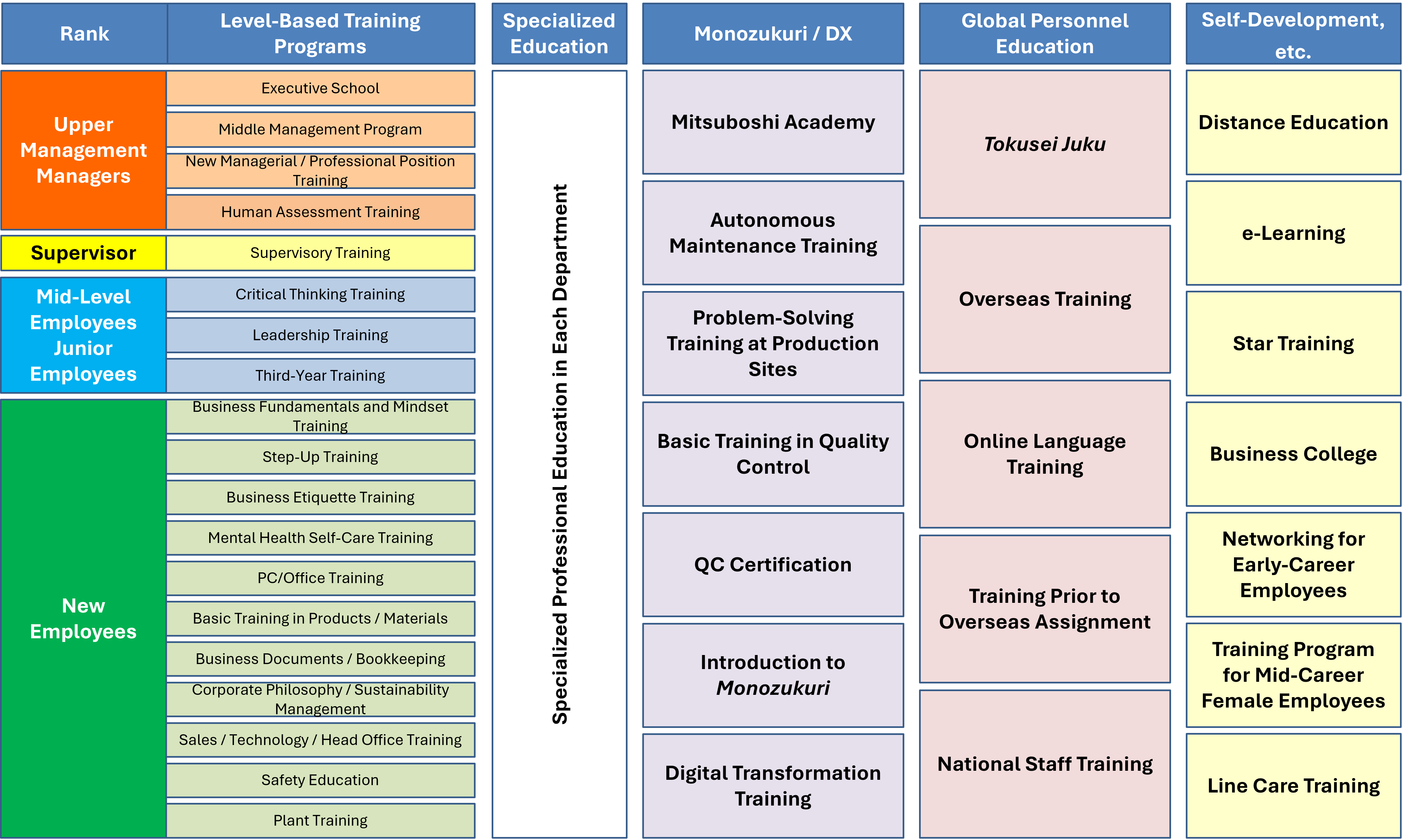
Development of Next-generation Leaders
To develop next-generation leaders who will lead transformation to success, the Company dispatches executive-candidate employees to external executive development programs. By learning logical thinking and the full range of management domains—“people,” “things,” and “money”—participants cultivate a general-management perspective. At the same time, competing and interacting with participants from other industries provides stimulation and contributes to self-improvement. Networks with participants across industries are also valuable assets.
Overseas Dispatch Training System
To develop human resources who can play active roles globally, the Company dispatches trainees to universities in two countries, the United States and China. In the countries where they are dispatched, not only is an environment prepared in which trainees can focus on acquiring language skills, but the training also provides a rare opportunity to cultivate diverse perspectives through cross-cultural exchange, which is not often experienced in Japan. After completion of the training, trainees are expected to play active roles in their departments as employees with a global perspective, and, depending on the career plans of the participants, they can also take on the challenge of working at overseas sites thereafter.
Mitsuboshi Academy
The Company accepts local employees of overseas affiliated companies in Japan and provides training to enable them to learn more deeply about the work they are responsible for locally. Local employees who learn production technology and quality control through OJT and acquire maintenance technologies for the latest equipment return to their countries and deploy what they learned in their own workplaces, thereby contributing to raising the overall level.
Self-development
To support self-directed reskilling, the Company offers a fully funded training program every two months, with participants selected through employee self-nomination. This program is provided in an e-learning format. Because attendance during working hours is also permitted with the approval of the participant’s immediate supervisor, participants can proceed with learning in accordance with their own lifestyles. In FY2025, learning opportunities were provided to 84 participants, with 8.7 training hours per person, and the program is being used to improve employee skills.
Number of Participants in e-learning Training Programs (unit: persons)
| Program | FY2023 | FY2024 | FY2025 |
|---|---|---|---|
| e-learning training | 81 | 74 | 84 |
Strengthening “Connections” through Recognition and Dialogue
Toward the realization of the “Target Position,” the Company places “recognition” and “dialogue” at the core. To date, the Company has worked to create opportunities for dialogue between supervisors and subordinates by introducing one-on-one meetings and enhancing feedback opportunities in personnel evaluations. However, the Company recognizes that there are variations among departments in the status and content of implementation.
Based on this situation, the Company positions improving the quality and frequency of dialogue as an important issue and will promote company-wide establishment of these practices.
Improving “Productivity of Co-creation” through Digital Utilization
The Group is steadily expanding its use of digital technologies and enables timely information sharing through cloud-based business systems. This information is accumulated as an important information asset that visualizes relationships with customers.
As AI technology advances, generative AI tools are increasingly supporting individual tasks and improving productivity. Going forward, the Group will use AI agents to further enhance individual work and pursue cross-organizational improvements in operational efficiency through digital technologies.
Measures Related to DX Utilization
| Measure | Promotion organization | FY2023 participants | FY2024 participants | FY2025 participants |
|---|---|---|---|---|
| Implementation of DX training programs | DX Promotion Office | 730 | 558 | 820 |
Diverse “Value Creation” through DEI and Work Style Reform
The Group conducts more than half of its sales and most of its production activities overseas, and recognizes that the active participation of diverse people is essential to supporting global business growth. Based on this recognition, the Group promotes the creation of an environment in which diverse people, including women, foreign nationals, and persons with disabilities, can fully demonstrate their abilities. At the same time, as the foundation for this, the Group reviews work styles and personnel systems in line with the times and works to realize flexible and inclusive organizational management.
On the other hand, promoting women’s participation is an important DEI issue for the Company. In response to this issue, the Company will advance the active hiring of women and promote the design of systems and the development of workplace environments that enable work-life balance regardless of gender, aiming to create workplaces where women can continue working over the long term and aspire to take on management positions.
Promotion of Women’s Participation
As of the end of March 2026, women accounted for 13.1% of the Company’s employees on a non-consolidated basis, 4.5% of employees in section-manager positions, and 35.7% of regular hires. The ratio of women employees across the entire Group was 16%. In reviewing the '21 Mid-Term Business Plan, the Company identified the Human Capital Strategy as an important priority and designated strengthening the Human Capital Strategy as a material issue. To increase the percentage of women in management positions, the Company is promoting diversity and has first set the percentage of women in section-manager positions as a KPI*.
* Materiality KPI: FY2026: 5% or higher; FY2030: 10% or higher (Mitsuboshi Belting non-consolidated) 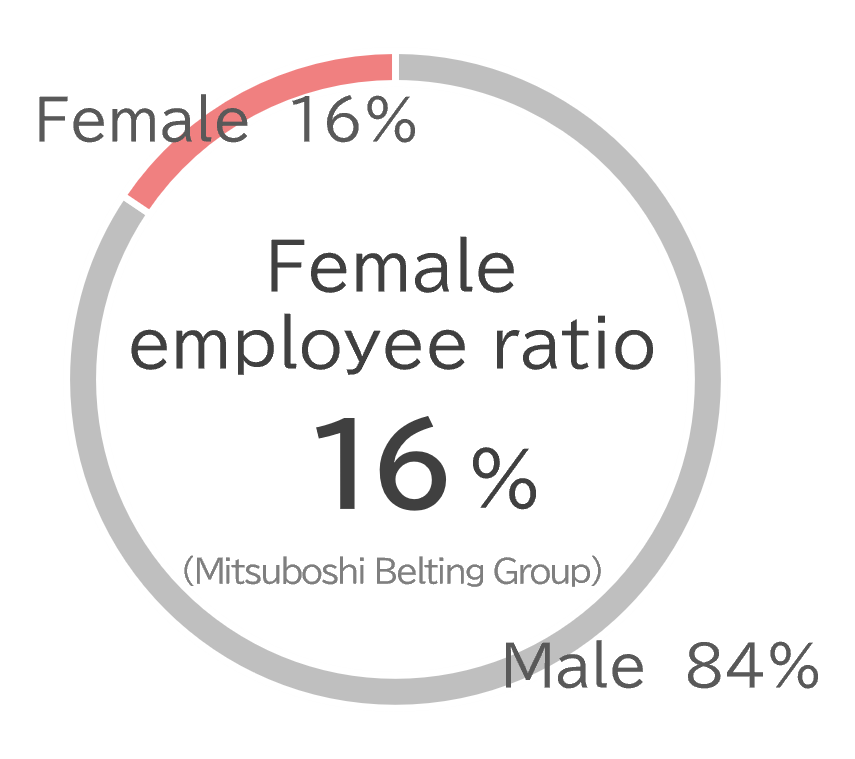
Active Participation of Multinational Human Resources
The Group is a global company that conducts production and sales at 15 sites in 12 countries, with more than 50% of both sales and production volume accounted for by overseas sites. Of approximately 4,500 employees active around the world, approximately 59% are foreign-national employees.
To enable these diverse people to fully demonstrate their capabilities, the Group works to secure and develop human resources suited to local cultures and values, and aims to strengthen competitiveness on a global basis. 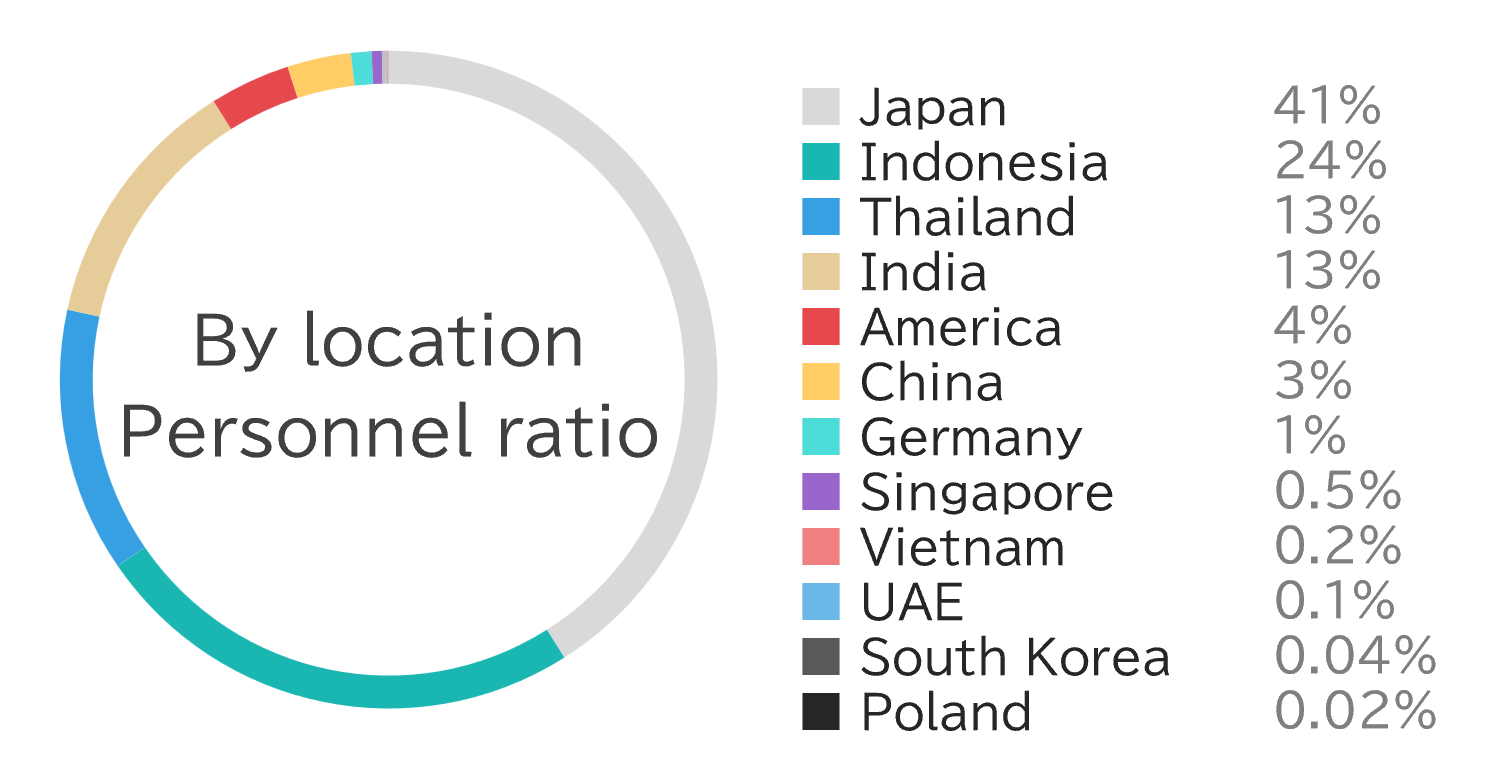
Supporting Employees throughout Longer Careers
With the working-age population declining, the Company recognizes the need to support employees throughout longer careers as an ongoing priority.
Maintaining and improving employee health is the foundation of this approach. The Company offers comprehensive medical examinations, cardiac examinations, brain examinations, and examinations for lifestyle-related diseases, and continuously reviews these programs based on advice from occupational physicians to ensure their effectiveness.
In addition, with regard to reskilling, education programs are planned and implemented mainly by the Human Resources Development Office and the DX Promotion Office, according to human-resource requirements based on personnel plans. Through this, the Company promotes the strengthening of the foundation that enables diverse people to play active roles over the long term.
Welcome Back System (Alumni Hiring System)
The Company is moving forward with the introduction of a system to rehire former employees who once left the Company due to life events or in pursuit of their own career plans. The Company expects that former employees who deeply understand the Company’s corporate culture and business operations will gain experience after leaving and return with different perspectives, creating opportunities to utilize their experience and knowledge, while also enabling the Company to gain new awareness of its own strengths and issues.
Employment of Persons with Disabilities
The Company has installed wheelchair ramps, toilets for persons with disabilities, and other facilities so that persons with disabilities can work with peace of mind. The Company also strives to increase employment of persons with disabilities, and the employment rate of persons with disabilities in FY2025 was 2.2%. Going forward, the Company will continue striving to increase employment of persons with disabilities, with the aim of complying with the statutory employment rate. The Company will continue aiming to be a company where everyone can work comfortably and where diverse people can play active roles.
Employment Rate of Persons with Disabilities
| FY2020 | FY2021 | FY2022 | FY2023 | FY2024 | FY2025 |
|---|---|---|---|---|---|
| 1.5% | 2.4% | 2.2% | 1.9% | 2.1% | 2.2% |
* The statutory employment rate has been 2.2% since April 2018, 2.3% since March 2021, 2.5% since April 2024, and will be 2.7% from July 2026.
Creating Workplaces with Fulfillment in Work
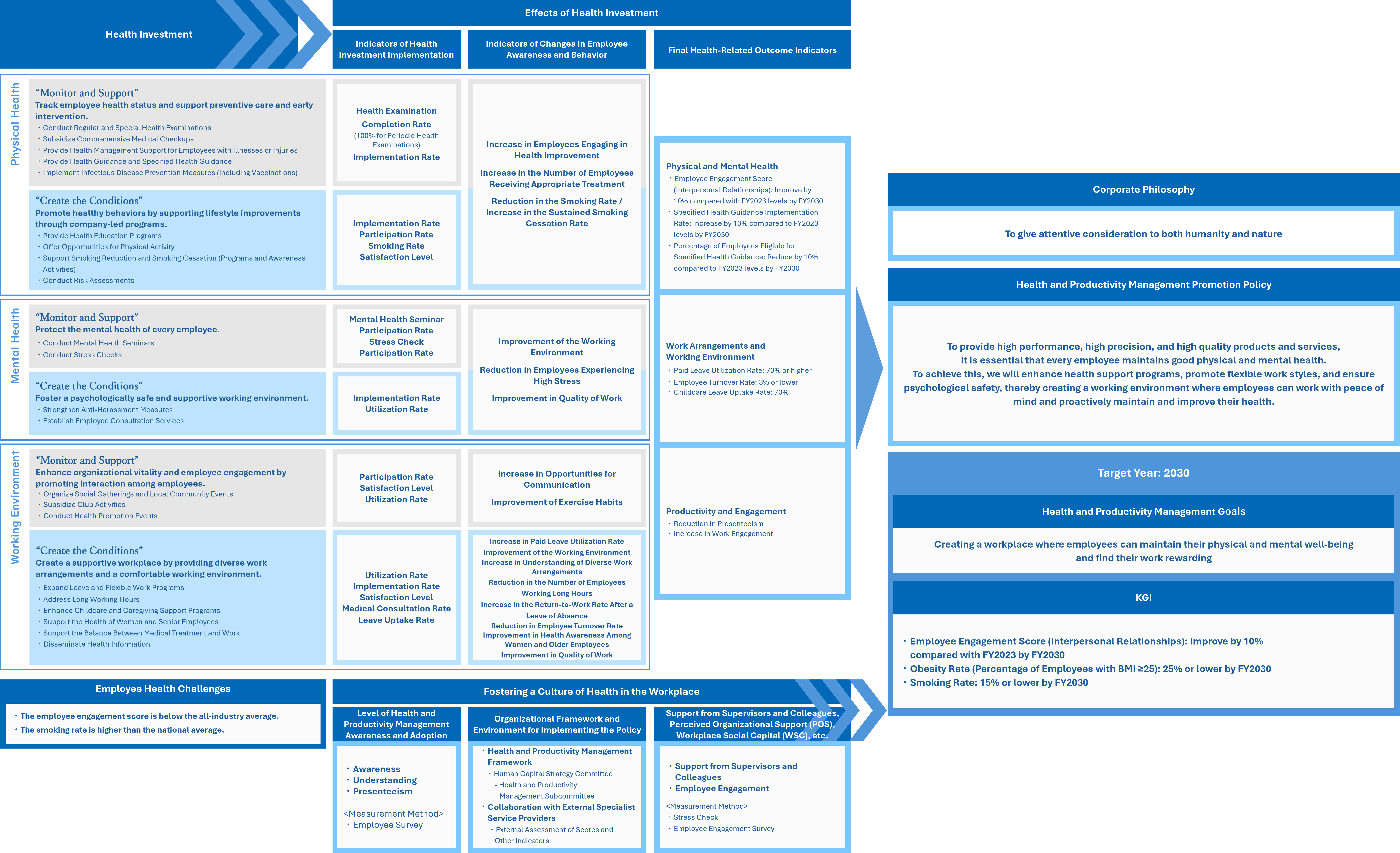
Promotion of Health & Productivity Management
The Company regards employee health as an important management resource and actively promotes health initiatives to create a workplace where employees can work with confidence while maintaining their physical and mental well-being.
As part of this initiative, the Company aims to obtain certification as a Health & Productivity Management Outstanding Organization, and is advancing the improvement of health awareness and the development of workplace environments across the entire organization. The Company views health not simply as “not being sick,” but as a state in which “body,” “mind,” and “connections with society” are maintained in good balance. Through health seminars, provision of exercise opportunities, activation of internal communication, and other activities, the Company supports health promotion from both physical and mental perspectives and is developing mechanisms that employees can continue without undue burden.
In addition, focusing also on issues related to lifestyle habits, the Company has set KPIs to reduce the ratio of employees who smoke to 15% or less by FY2030 and the obesity rate (BMI 25 or higher) to 25% or less by FY2030, and is gradually developing measures to raise health awareness and encourage behavioral change. (FY2025 results / smoking rate: 24.8%; obesity rate: 29.1%)
By continuing and developing health & productivity management initiatives, the Company will promote the creation of a company where each employee can play an active role with vitality, and will aim to realize workplaces with fulfillment in work and achieve sustainable corporate growth.
- Health Declaration
“Make the world go ‘round. That power comes from a healthy mind and body.”
We create days in which people enjoy taking on challenges and feel themselves grow,
days that lift the spirit and brighten tomorrow.
- Policy for Promoting Health & Productivity Management
To supply goods and services of high performance, high precision, and high quality, it is indispensable that each employee be healthy both physically and mentally.
To realize this, the Company will develop a workplace environment where employees can work with peace of mind and autonomously maintain and improve their health, through the enhancement of health support measures, flexibility in work styles, ensuring psychological safety, and other initiatives.
- Promotion System
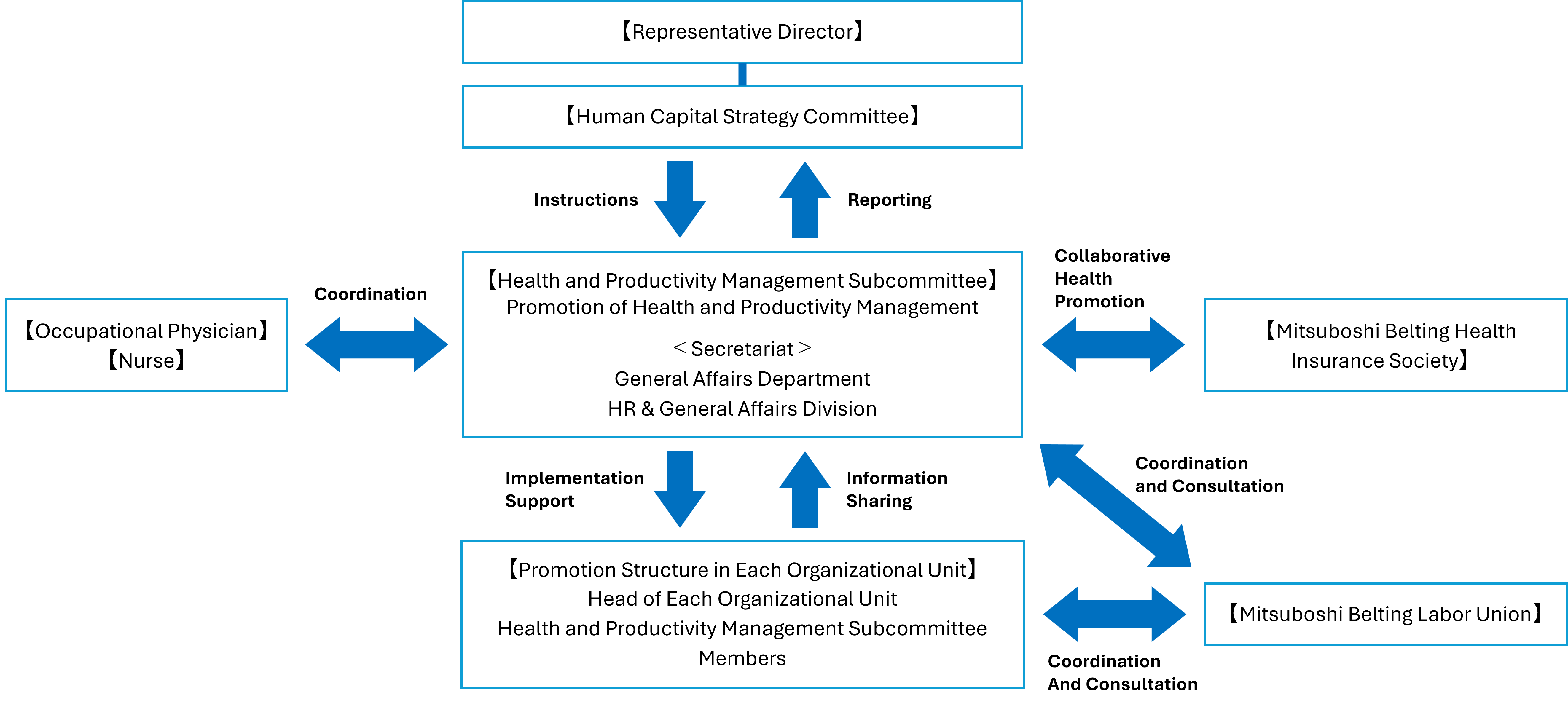
Health & productivity management will be promoted mainly by the Health & Productivity Management Subcommittee, a subordinate organization of the Human Capital Strategy Committee.
- Health & Productivity Management Strategy Map
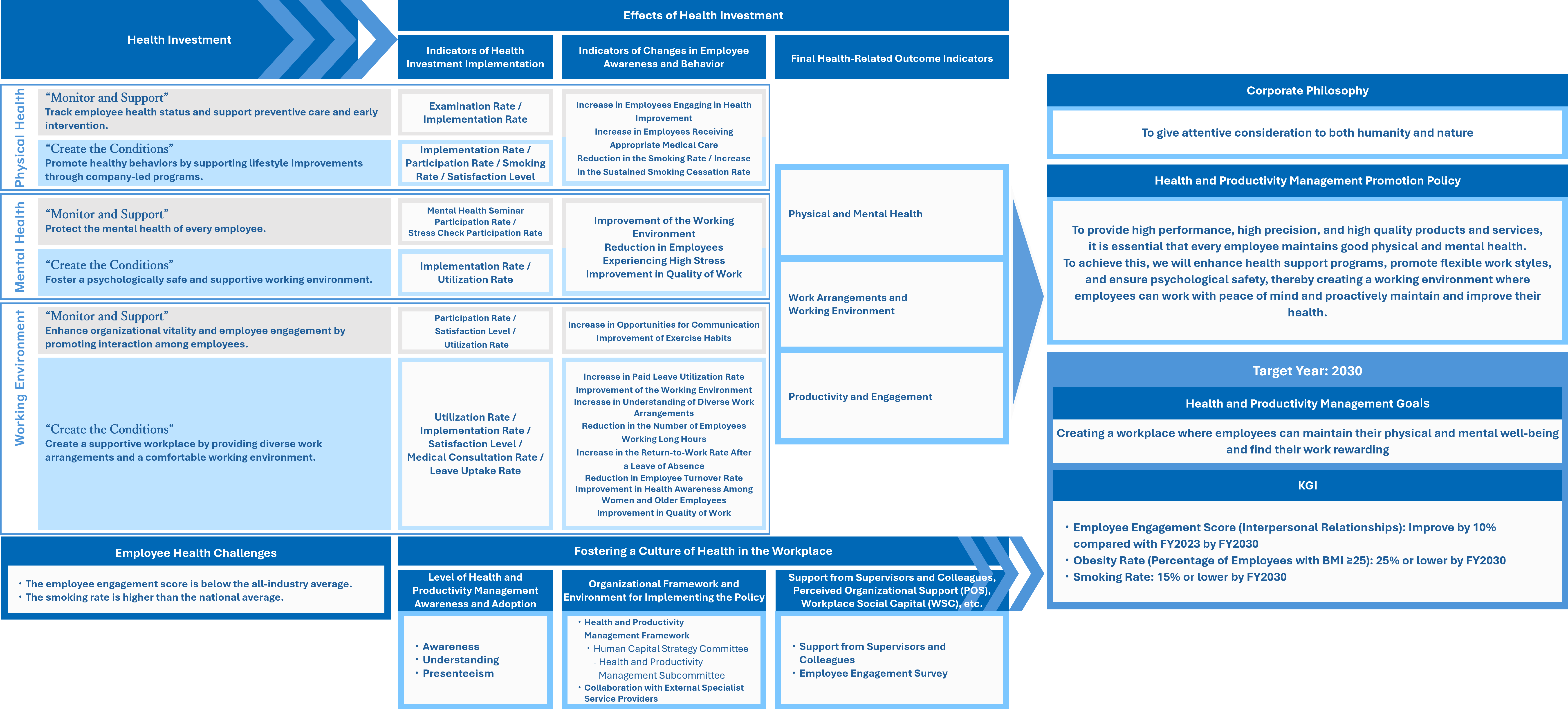 * For the detailed version, please see here.
Development of an Environment for Improving Employee Engagement
The Group’s corporate philosophy, “To give attentive consideration to both humanity and nature,” expresses respect for individuals and diversity. The Company aims to create workplaces where all employees—regardless not only of gender or race, but also of differences in living environment and ways of thinking—can work safely and with peace of mind, enhance productivity, and work with a sense of fulfillment.
The Company began measuring employee engagement in FY2023. Because factors such as “fulfillment,” “sense of accomplishment,” and “relationship with supervisors” have a high correlation with scores, the Company will work to improve employee engagement scores by improving relationships between supervisors and subordinates through measures such as one-on-one meetings and by fostering “fulfillment” through measures such as the job-matching system.
Work-Life Balance (Balancing Work with Childcare, Nursing Care, Medical Treatment, etc.)
As stated above, the Company aims to be an enterprise where the abilities and diverse individual characteristics of each employee with different roots and backgrounds, such as age, nationality, and gender, can be fully demonstrated. Regardless of gender, the Company is promoting the creation of workplace environments where employees can easily balance work and private life in parallel with life events such as childcare and nursing care. The main initiatives are as follows.
- Childcare Leave System and Shortened Working Hours System
Childcare leave can be taken in accordance with the law until the child reaches the age of two at the longest. After returning from childcare leave, employees may choose a shortened working-hours arrangement that reduces the working day by up to two hours. Shortened working hours can be selected until the child reaches the beginning of elementary school, and there is no wage reduction until the child reaches the age of three. The Company also has systems such as restrictions on overtime work and late-night work, showing consideration for childcare.
Childcare Leave Acquisition Rate
| FY2022 | FY2023 | FY2024 | FY2025 | |
|---|---|---|---|---|
| Men | 26.5% | 59.3% | 50.0% | 78.6% |
| Women | 100.0% | 100.0% | 100.0% | 100.0% |
- Childcare Support
The Company obtained “Kurumin” certification in 2008, which recognizes companies actively working to support the development of the next generation. Through support for balancing work and childcare and the development of diverse work styles, the Company supports the continuous active participation of each employee.
- Annual Paid Leave System
To enable employees to continue working while responding to various life situations, employees can take up to 40 days of annual paid leave, including carried-over days. The system also allows leave to be taken in half-day and hourly units so that employees can more easily take leave.
Annual Paid Leave Utilization Rate
| FY2022 | FY2023 | FY2024 | FY2025 |
|---|---|---|---|
| 53.1% | 68.3% | 67.1% | 67.0% |
- Special Leave System
In addition to annual paid leave, the Company has established systems that allow employees to take paid leave corresponding to each person’s life events, such as marriage, childbirth, bereavement, memorial services, and transfers. Birthday leave can be taken within 10 days before or after the employee’s birthday, and refresh leave is granted to employees who reach 15 or 25 years of service, together with the provision of travel vouchers.
- Health Management Leave System
The Company has established a “Health Management Leave System” for the purpose of creating a workplace environment where employees can continue working with peace of mind while balancing treatment for illness with work.
In addition to personal illnesses such as cancer, designated intractable diseases, mental-health disorders, juvenile-onset dementia, menopausal symptoms, fractures, and chronic lower back pain, infertility treatment is also covered by this system. Through this system, the Company supports employees so that they can continue working without undue burden even when treatment or hospital visits are necessary, and promotes the creation of workplaces that consider the health and ease of working of each employee.
- • Ohoshisama System, Ohoshisama Leave, and Ohoshisama Training
The Ohoshisama System and Ohoshisama Leave support employees in single-parent households, employees raising children with disabilities, and employees caring for family members. The programs provide both financial assistance and special leave.
Furthermore, to enable employees returning after long-term childcare leave to return smoothly to the workplace, the Company conducts “Ohoshisama Training” for employees returning to work. The Company has developed a unique training curriculum that incorporates feedback from employees who have previously returned to work. In addition to providing information on new internal systems and the use of internal tools, it offers comprehensive support, including mechanisms to involve the workplace to which the employee will return and content by outside lecturers on the theme of “balancing work and childcare.” This helps reduce anxiety associated with returning to work and supports the building of networks.
In addition, so that employees can prepare for returning to work with peace of mind even during leave, the Company issues the “Ohoshisama Dayori” newsletter each quarter, providing internal information and helping maintain a connection with the Company.
- Family Care Leave
Family care leave can be taken for up to 93 days in accordance with applicable law. The Company also establishes restrictions on overtime work and late-night work and gives consideration to the lives of employees providing nursing care.
- Relaxation of Dress Code
As part of promoting DEI, the Company has changed the office dress code so that employees can choose clothing other than suits and uniforms. The Company aims to create a workplace environment where each employee’s individuality can be utilized and where new, free ideas and autonomous thinking can more easily emerge.
Turnover Rate within Three Years after Joining as New Graduates
For the five years from 2018, the average turnover rate within three years of joining the Company as a new graduate was approximately 6%, well below the national average* of approximately 30%. Under its corporate philosophy, “To give attentive consideration to both humanity and nature,” the Company fosters a people-centered corporate culture in which employees can contribute actively and positively.
* Source: Ministry of Health, Labour and Welfare, “Status of Turnover among New Graduates.”
| Fiscal year of joining | Number of new employees | Number leaving within 3 years | Turnover rate |
|---|---|---|---|
| FY2018 | 33人 | 2人 | 6% |
| FY2019 | 36人 | 2人 | 5% |
| FY2020 | 23人 | 1人 | 4% |
| FY2021 | 22人 | 3人 | 13% |
| FY2022 | 19人 | 0人 | 0% |
| FY2023 | 26人 | 4人 | 15% |
Targets and Implementation Status
For the measures under “Human Capital Strategy,” namely “improvement of the percentage of women in management positions (managerial positions)” and “improvement of employee engagement,” KPIs have been set with the aim of improving each measure rapidly and reliably.
| Measures for the issue | KPI (Mitsuboshi Belting non-consolidated) | FY2025 progress |
|---|---|---|
| Improvement of the percentage of women in management positions (managerial positions) | Ratio of women in management positions FY2026: 5% or higher FY2030: 10% or higher |
Ratio of women in management positions: 4.5% |
| Improvement of employee engagement | Score improvement target FY2026: 10% improvement FY2030: 13% improvement |
Engagement score: 3.9% improvement compared with FY2023 |